
Oakland · Sauna Builder Services
Cedar Tub Install
Western red cedar soaking tubs and Japanese-style ofuro set, plumbed, heated and covered, indoors or in the yard.
A wooden tub is a different thing entirely
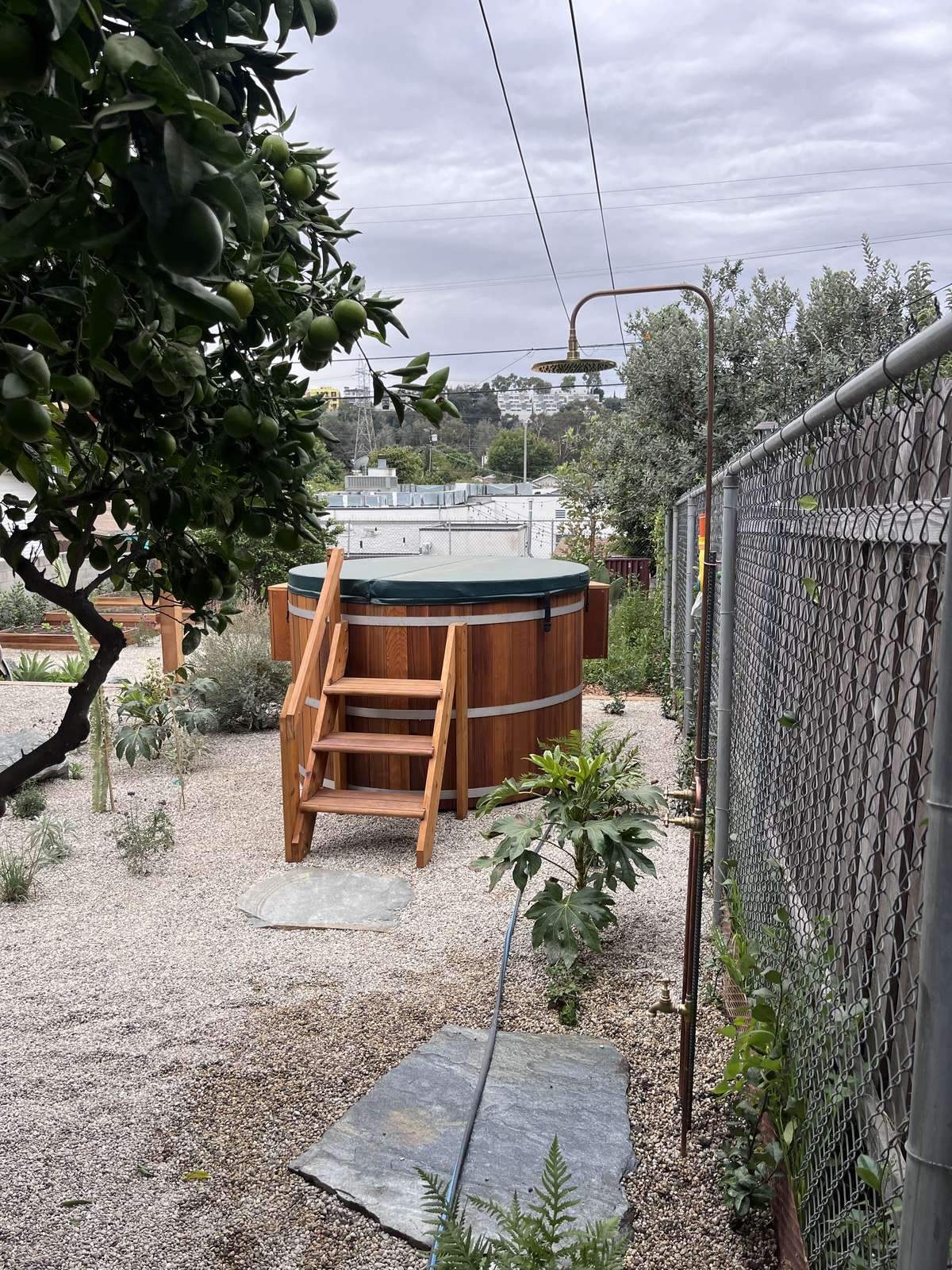
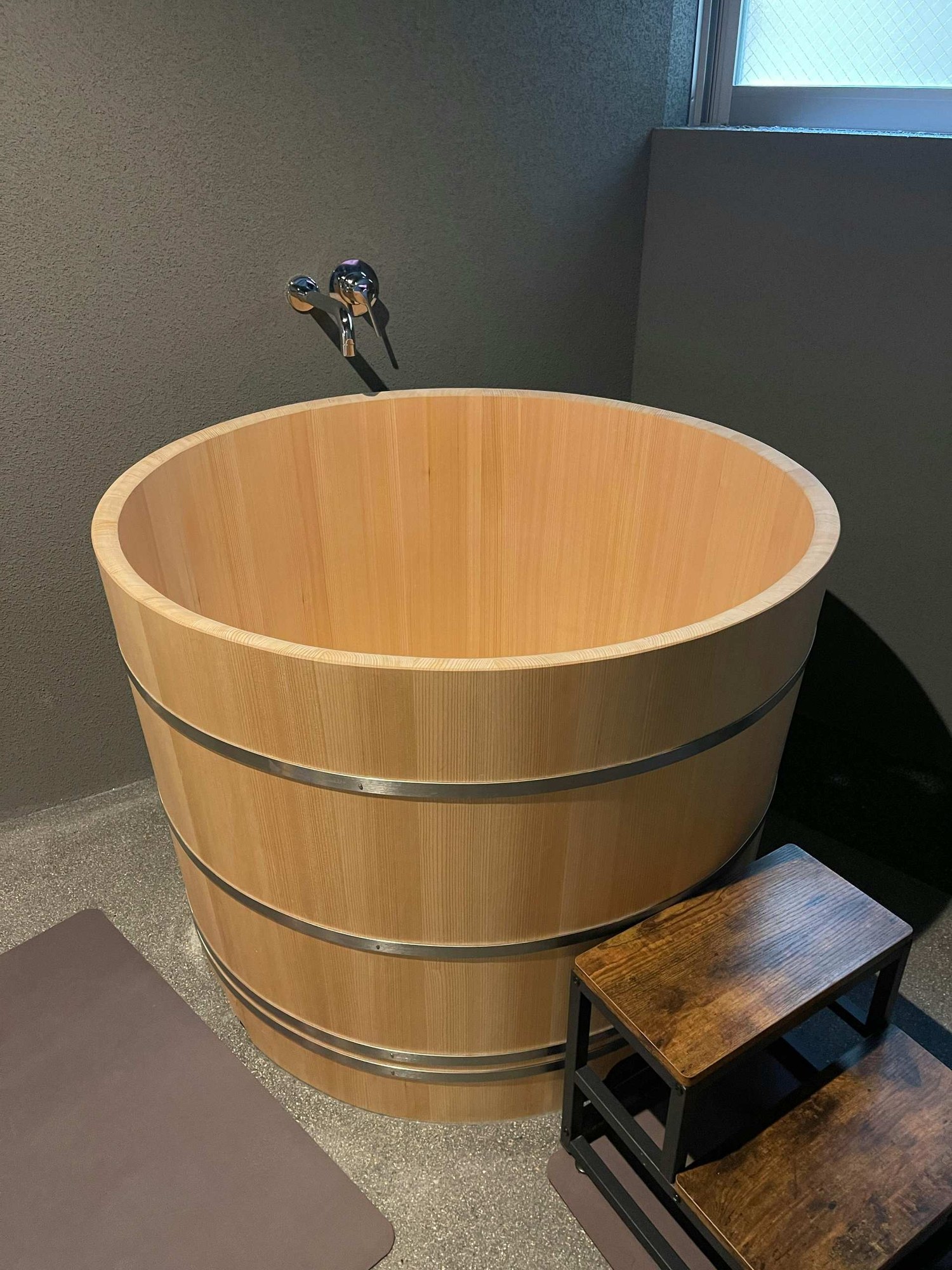
A cedar tub is not an acrylic hot tub with wood trim around it. The vessel itself is solid western red cedar, staved and banded like a barrel, and it smells like cedar every time you fill it. Japanese ofuro are deeper and narrower, built for sitting upright and submerged to the shoulders rather than reclining. Both hold heat beautifully, because wood is a far better insulator than acrylic.
They suit the East Bay well. Our winters are wet rather than freezing, so a wooden tub outdoors is a realistic year-round proposition in a way it would not be in a cold climate. And a compact ofuro fits in a Temescal or Glenview yard that would never take a full hot tub, which is why we install more of them each year.
We install cedar tubs, Japanese soaking tubs and traditional hot tubs, with wood, gas or electric heat, indoors or out. A cedar tub next to an outdoor sauna is one of the best combinations we build.
Why installation decides how long it lasts
Wooden tubs fail for one of two reasons, and both trace back to installation. Either they were allowed to dry out, which shrinks the staves and breaks the seal. Or they sat on a base that held water against the bottom, which rots them from underneath. Correct siting, drainage and a proper cover solve both.
- Bases built to drain, with the tub held clear of standing water underneath.
- Structural check first, because a filled tub is a serious point load on a deck or a floor.
- Proper swelling and seasoning at commissioning, so the staves seal correctly the first time.
- Heating sized for how you actually use it, since a wood-fired stove and an electric heater suit different habits.
- Fitted cedar tub covers, which is what keeps heat in and debris out between soaks.
- Sanitation set up and explained, because wood needs a gentler approach than a plastic shell.
Reasons to choose a cedar tub
A wooden tub is the right choice in a set of specific situations we see often.
You want to soak, not lounge
An ofuro is deep and upright, and you sit submerged to the shoulders. It is a different experience from reclining in a jetted tub and most people know immediately which one they want.
The yard is small
A four or five foot round cedar tub has a fraction of the footprint of a standard hot tub while holding the same depth of water. In a narrow Oakland lot that is frequently the deciding factor.
You want it to look like part of the garden
Cedar weathers to a soft grey and reads as a garden object. An acrylic shell reads as equipment. In a well-planted East Bay back garden the difference matters.
You are pairing it with a sauna
Hot room, then a soak, then cool air. A cedar tub a few steps from a sauna makes the whole sequence work, and the plumbing and drainage get done once if they are planned together.
You want fewer jets and less machinery
Many cedar tubs run with no jets at all, just heat and still water. Less to break, less noise, less power draw, and a quieter soak.
How a cedar tub install works
Siting and structural check
We look at where it will go, check drainage, and verify the structure will carry it. A filled five-foot tub with people in it is several thousand pounds, so a deck or an upper floor needs proper assessment rather than optimism.
Base, plumbing and heat
We build a base that drains and holds the tub clear of standing water, run the water supply and drain, and install the heat source. Wood-fired stove, gas heater or electric, each with its own requirements around clearance, venting and circuits.
Fill, swell and commission
The tub is filled and left to swell so the staves seal, which takes a few days on a new tub and is the step people most often rush. Then bands are checked, heat is commissioned, sanitation is set up and the cover is fitted.
Cedar tub options
Wooden tubs come in more variations than most people realise before they start looking.
Japanese ofuro
Deep, upright soaking tubs, often square or oval, sized for one or two people. Traditionally hinoki cypress, though western red cedar is far more practical to source and maintain here.
Round cedar hot tubs
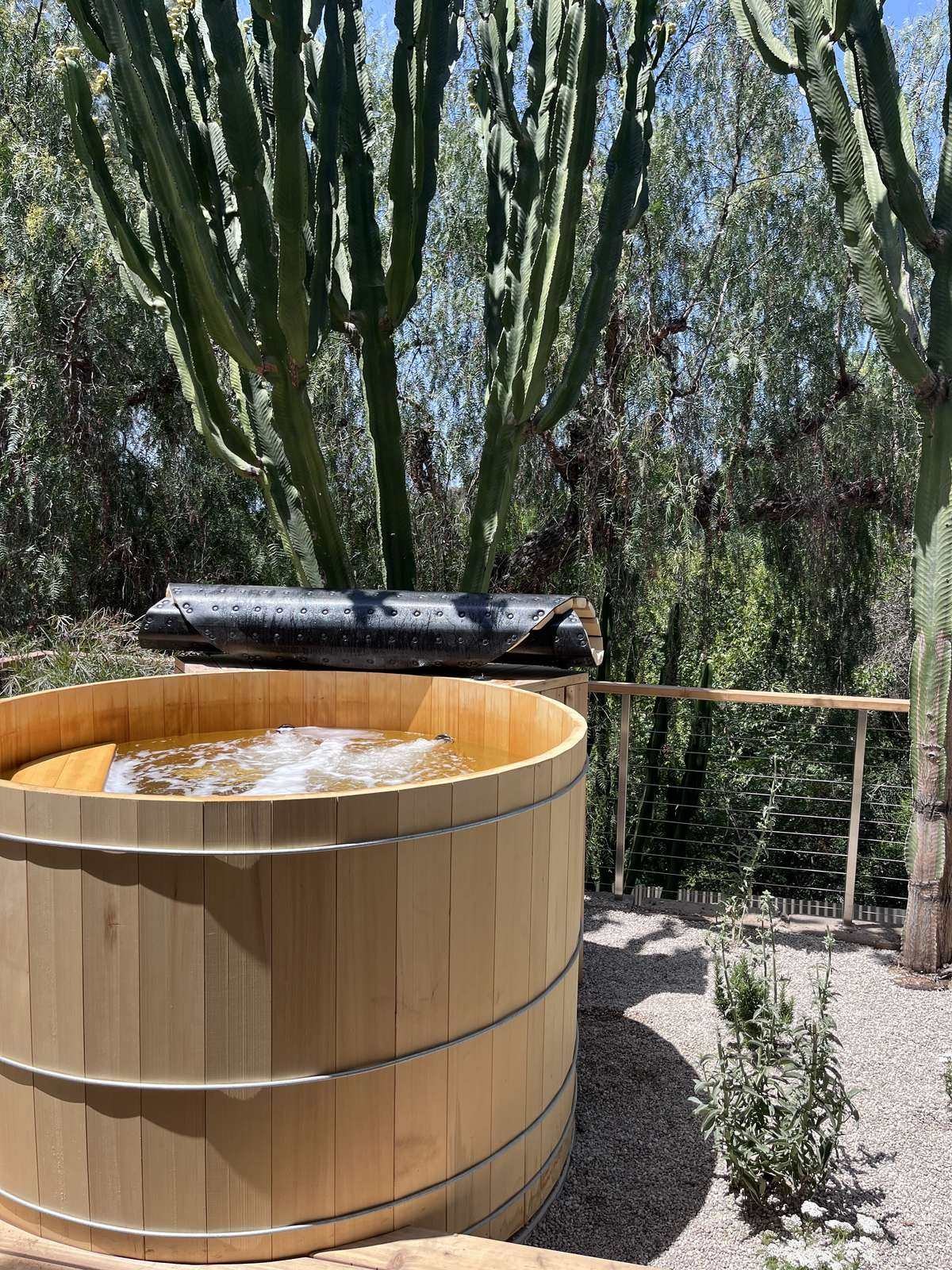
The classic staved barrel tub, four to eight feet across, seating two to eight. Bench seating around the inside and the best heat retention of any configuration.
Wood-fired heat
An internal or external stove that heats the water directly. No power needed, a beautiful ritual, and slow. Plan on ninety minutes to two hours from cold.
Gas and electric heat
Thermostatic control, scheduling and the ability to hold temperature continuously. The practical answer if you want to soak on a weeknight without planning ahead.
Cedar tub covers
A fitted insulated cover is not an accessory. It is what keeps the water hot, keeps leaves and rain out, and stops the wood above the waterline drying and shrinking.
Sanitation and filtration
Wood does not tolerate the chlorine levels an acrylic shell shrugs off. We set up ozone, mineral or low-chlorine systems and show you the routine that keeps the water clean without damaging the tub.
What a cedar tub install costs
Supplied and installed, cedar tubs in Oakland generally run seven to twenty-eight thousand dollars. The variables:
- Size and style, since a two-person ofuro and an eight-person round tub are far apart.
- Wood species, with hinoki cypress well above western red cedar on price.
- Heat source, where wood-fired is simplest and gas or electric adds plumbing and circuits.
- Base and structural work, which is minor on grade and significant on a deck or upper floor.
- Distance to water, drain and power from where the tub will sit.
- Jets and filtration, if you want them, though many owners deliberately skip both.
A cedar tub and a cold plunge planned together share drainage and cost less than two separate projects. If you are undecided between wet and dry heat, our infrared saunas page covers the gentlest option, and indoor saunas covers building inside. Everything sits together on our services page.
Frequently Asked Questions
How long does a cedar tub last?
Fifteen to twenty-five years for western red cedar that is kept full, drained properly on the rare occasions it is emptied, and covered between soaks. The thing that kills them is drying out, because the staves shrink and the seal breaks. If you are leaving for a long trip, ask us about the right way to leave it.
What is the difference between a cedar tub and a regular hot tub?
The vessel. A cedar tub is solid staved wood, so it insulates better, smells like cedar, and looks like a garden object rather than equipment. It usually has fewer or no jets and needs gentler water chemistry. An acrylic hot tub is lower maintenance and has more machinery. Most people choose on how they want it to feel and look rather than on specification.
What should I look for when purchasing a backyard cold plunge?
Chiller capacity against the volume you actually want, since an undersized chiller will not hold fifty degrees on a warm afternoon. Real insulation on the vessel, because that decides your running cost. Filtration and sanitation you will genuinely keep up with. A drain that goes somewhere sensible. And check the noise rating on the chiller, since it sits outside and your neighbours are close on most Oakland lots.
Can a cedar tub go on my deck?
Only after a structural assessment. A filled five-foot tub with bathers can weigh four to six thousand pounds concentrated in a small area, which is well beyond what a typical residential deck is designed for. Many decks can be reinforced. We check before anything is ordered rather than after.
See all FAQs on our FAQ page.
Planning cedar tub install in Oakland?
Tell us about your space and we will send you a free written estimate. No pressure and no obligation. Fill in the form or call us and we will help you work out what fits your room, your panel and your budget.
Or call us now: 510-462-6097